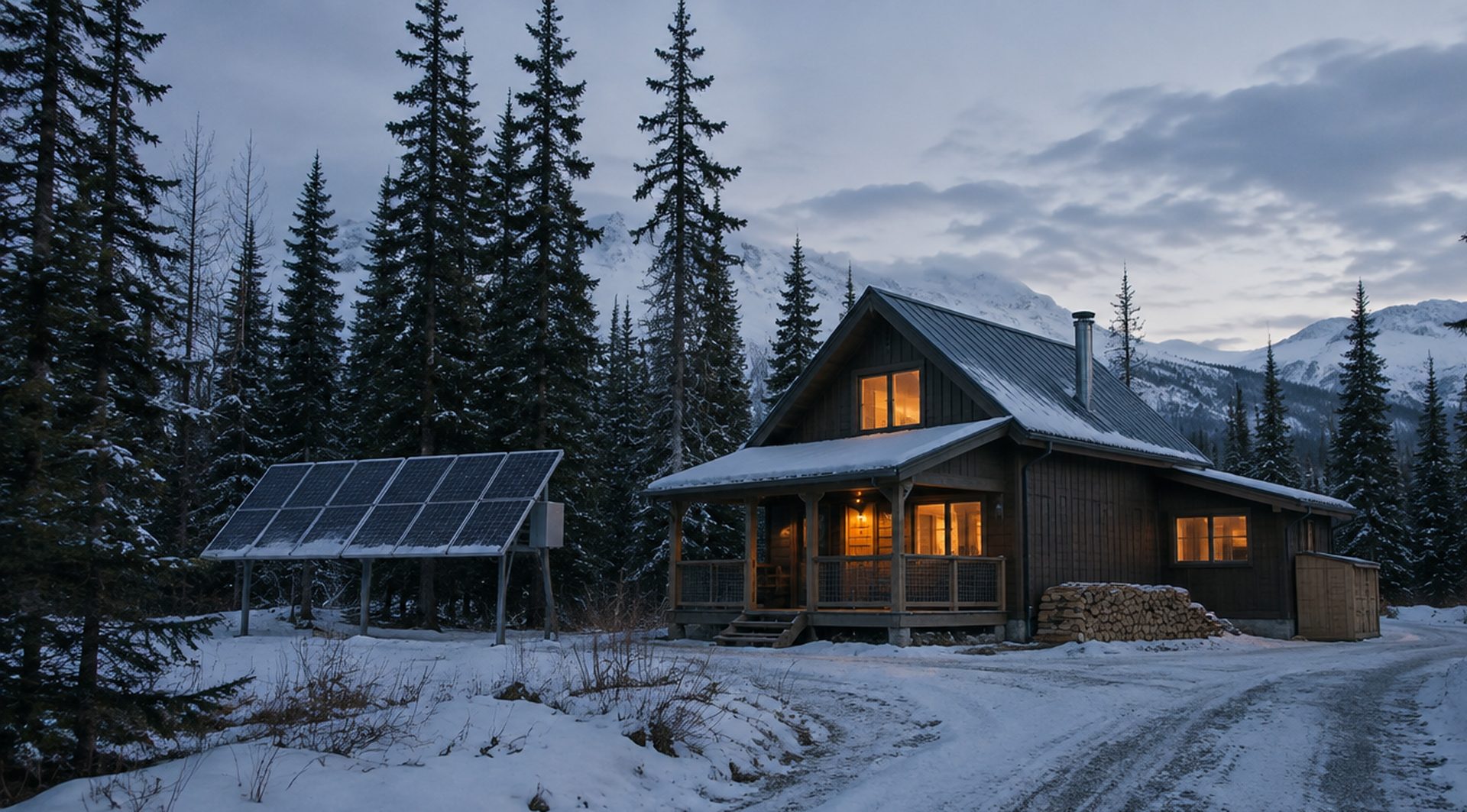
Most off-grid Alaska cabins run on three parts working together: solar panels for the long summer days, a battery bank that stores power for nights and cloudy stretches, and a generator that covers the dark winter months and recharges the batteries automatically. Sizing all three starts with what the cabin actually runs.
Where do you start when planning off-grid power?
Start with a list of everything that needs power and how long it runs each day: lights, a water pump, a fridge, a furnace blower, chargers and tools. That daily total sets the battery size, and the battery size sets how much solar and generator time you need.
How big should the battery bank be?
The battery bank should cover at least a full day of use, and more if you want to ride out cloudy stretches without starting the generator. Lithium batteries handle deep cycling better than older lead-acid banks but need to stay warm enough to charge.
Why keep a generator if you have solar?
Because December in Alaska does not produce enough solar for most cabins. A generator with an automatic start tops up the batteries when they run low, so the cabin keeps running even when nobody is there to pull a cord.
What about the wiring?
An off-grid system is a small power plant, so the inverter, charge controller, battery bank and generator need proper overcurrent protection, grounding and a transfer setup. Done right, it runs for years without surprises.
Quick questions
Can I add solar to a cabin that already has a generator?
Yes. Adding panels and a battery bank usually cuts generator run time sharply in the summer months.
Can the system run my well pump?
Yes, if the inverter and battery are sized for the pump's startup surge. We size for it.
Want a straight answer for your house?
Send a photo and a quick description. We reply with one flat price.