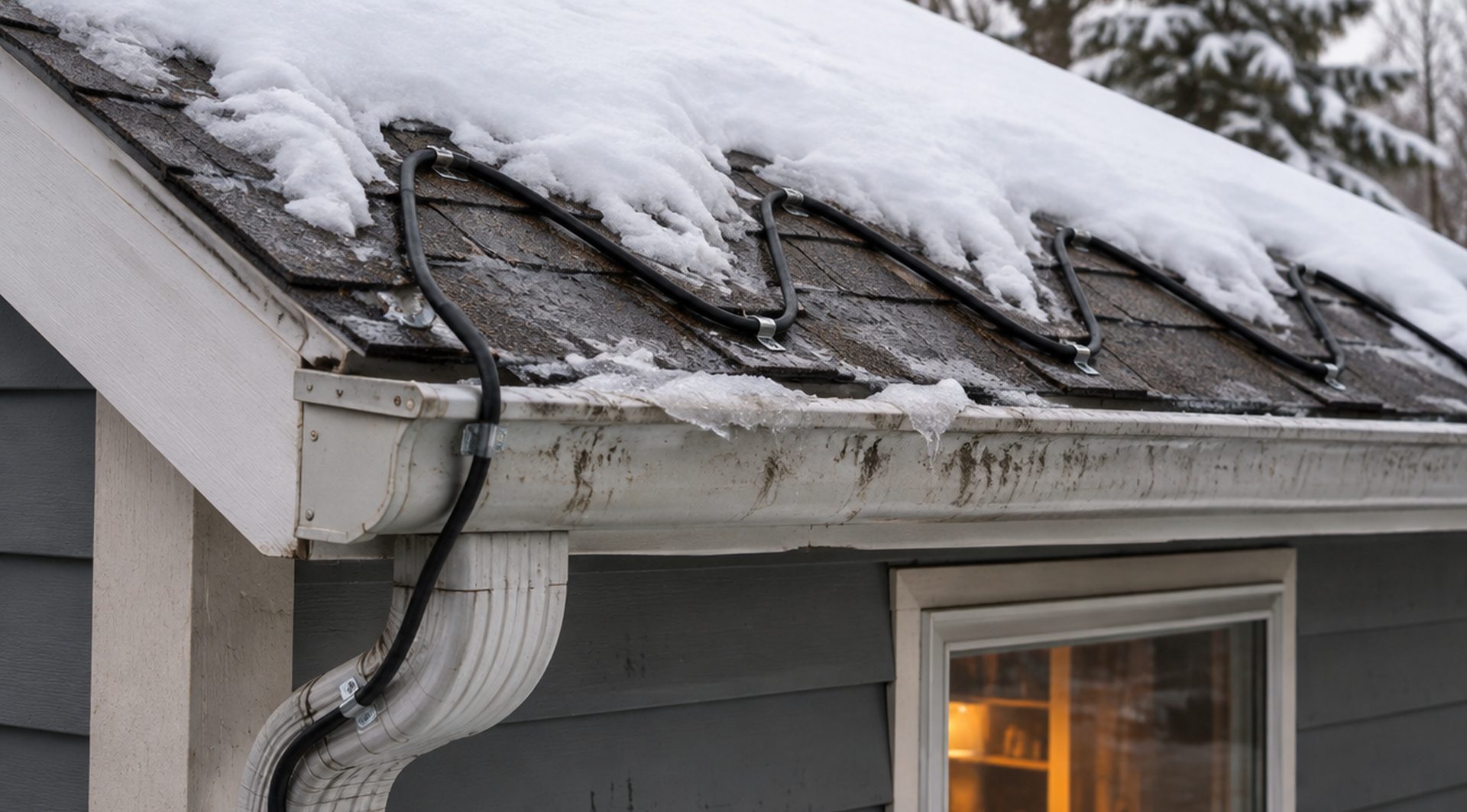
Heat tape and heat trace do the same job: an electric cable keeps a pipe or roof edge above freezing. Heat tape usually means a simple plug-in cable wrapped on a water pipe. Heat trace usually means a self-regulating cable on its own protected circuit with a controller, used for roofs, gutters and long runs.
Where is heat tape used?
Heat tape protects short, exposed water lines in crawlspaces, under mobile homes and at well heads. It is the most common fix for a pipe that freezes every cold snap.
Where is heat trace used?
Heat trace is used for roof edges, gutters, downspouts and long pipe runs where ice dams or freeze-ups cause damage. Self-regulating cable puts out more heat where it is colder and less where it is warmer.
How much power does it use?
A cable that runs all winter adds up on the power bill. A thermostat or controller that turns it on only near freezing temperatures cuts that cost, which is why we wire most systems with one.
When does heat tape need replacing?
Replace heat tape if the jacket is cracked, there are discolored or melted spots, or the GFCI keeps tripping. Old tape that fails in January usually takes a pipe with it.
Quick questions
Does heat tape need a GFCI?
Yes. Heat cables should be on ground-fault protected circuits, and we install them that way.
Can heat tape plug into an extension cord?
It should not. A dedicated, protected outlet or circuit near the run is the safe setup.
Want a straight answer for your house?
Send a photo and a quick description. We reply with one flat price.