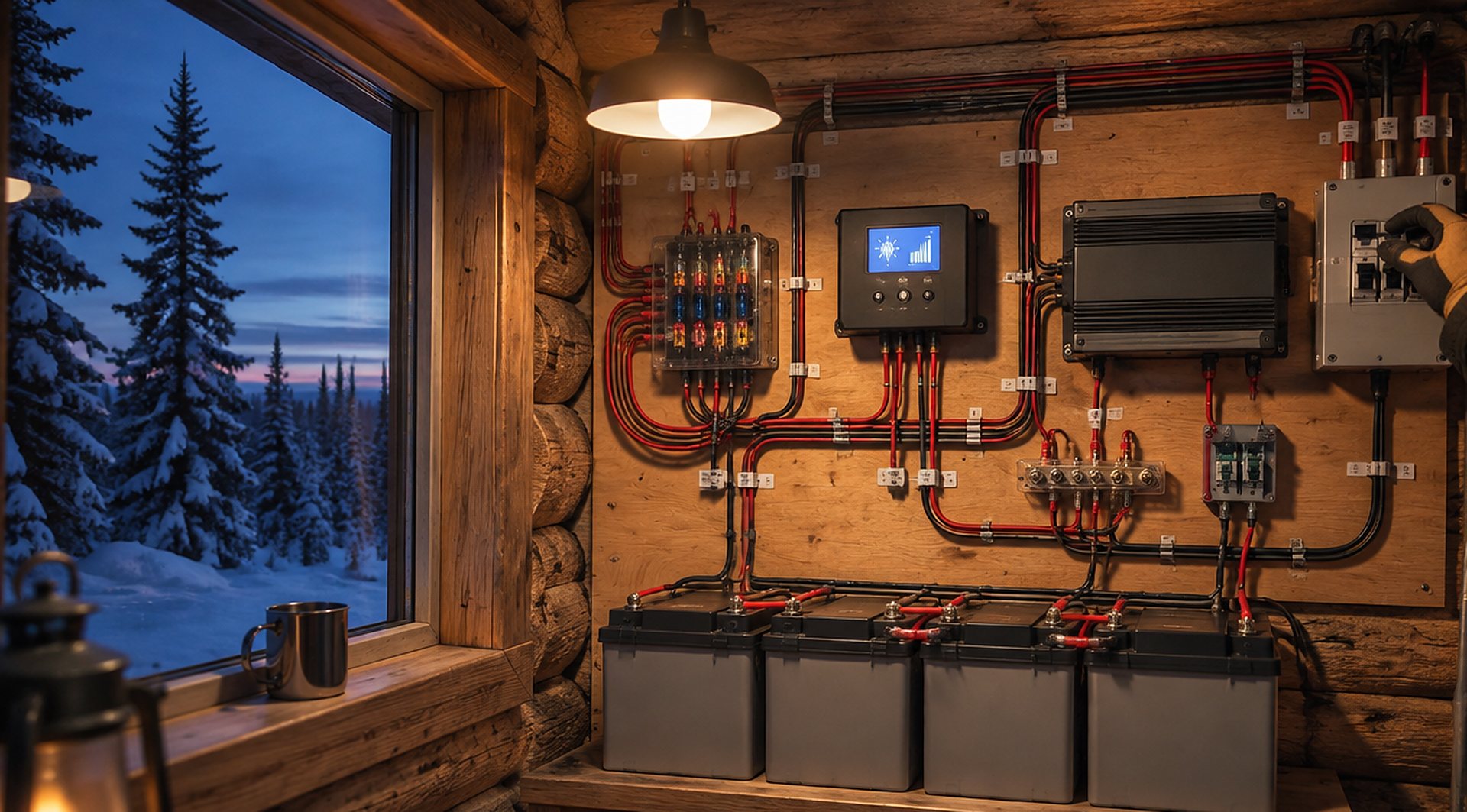
A 12V power system stores energy in a battery bank and runs lights, pumps, fans and electronics directly from it. In an RV or off-grid cabin, the batteries are charged by solar, a generator, shore power or the vehicle alternator, and an inverter turns battery power into regular 120V outlets. Sizing starts with what you run each day.
What are the parts of a 12V system?
Every 12V system has four parts: a battery bank that stores power, one or more charging sources, fuses and wiring that carry it safely, and the loads that use it. Most also add an inverter for 120V outlets and a battery monitor that shows how much charge is left.
Lithium or lead-acid batteries?
Lithium batteries cost more upfront but give you more usable capacity, weigh less and last many more charge cycles than lead-acid or AGM. In Alaska, lithium needs to stay above freezing to charge, so many come with built-in heaters or go inside a heated space.
How do you size the battery bank?
Add up how many amp-hours your lights, pump, fridge, furnace blower and chargers use in a day, then multiply by how many days you want to go without charging. That total, with a margin, sets the size of the bank.
Why does wire size matter so much at 12V?
Low voltage means high current, and high current through thin wire causes voltage drop and heat. Undersized cable is the most common reason RV and cabin systems underperform or overheat. Every run should be sized for its length and fused at the battery.
When should you use 24V or 48V instead?
Step up to 24V or 48V when loads get bigger or cable runs get longer, which is common in cabins. Higher voltage carries the same power with less current, so wires can be smaller and lose less energy.
| Source | Best for |
|---|---|
| Solar panels | Parked days and long Alaska summers |
| DC-DC charger | Charging from the alternator while you drive |
| Shore power | Campgrounds and the driveway at home |
| Generator | Dark months and heavy loads |
Quick questions
Can I run a microwave off my RV batteries?
Yes, with a big enough inverter and battery bank. A microwave draws a lot of current, so the cables and fuses have to be sized for it.
Do lithium batteries work in Alaska winters?
They work, but most cannot charge below freezing. Choose batteries with built-in heaters or keep them in a heated space.
Want a straight answer for your house?
Send a photo and a quick description. We reply with one flat price.